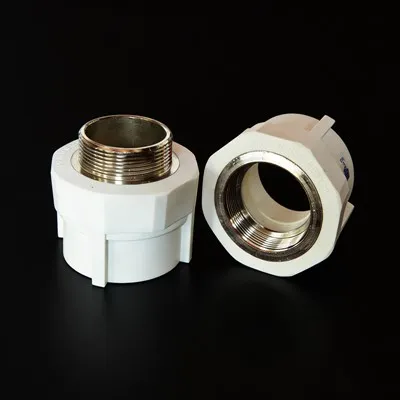
As a supplier of PPR Double Female Elbows, I've been frequently asked whether these fittings require maintenance. To give a comprehensive answer, let's delve into the nature of PPR Double Female Elbows, their characteristics, the conditions they operate in, and how all these factors relate to the necessity of maintenance.
Understanding PPR Double Female Elbows
PPR, or Polypropylene Random Copolymer, is a thermoplastic resin that is well - known for its excellent chemical resistance, durability, and heat tolerance. A PPR Double Female Elbow is a pipe fitting designed to connect two pipes at an angle, usually 90 degrees or 45 degrees. It has female threading on both ends, allowing for easy connection with male - threaded pipes or other fittings.
The use of PPR Double Female Elbows is widespread in various plumbing systems, including residential, commercial, and industrial settings. They are commonly used in water supply systems, both for cold and hot water, due to their ability to withstand a relatively wide range of temperatures.
Characteristics That Affect Maintenance
Chemical Resistance
One of the outstanding features of PPR is its high chemical resistance. It can resist the corrosion and degradation caused by most common chemicals found in water supplies, such as chlorine, acids, and alkalis. This means that in normal water plumbing systems, the PPR Double Female Elbow is not likely to be attacked by the substances in the water, reducing the risk of chemical - induced damage. For example, in a domestic water supply system where the water is treated with a certain amount of chlorine for disinfection, the PPR Double Female Elbow can maintain its integrity over a long period without being corroded. Therefore, from a chemical perspective, the need for frequent maintenance is significantly reduced.
Durability
PPR is a strong and durable material. It has good impact resistance, which allows the Double Female Elbow to withstand physical shocks and vibrations to a certain extent. In a plumbing system, there may be minor vibrations during the flow of water or due to the operation of pumps. The PPR Double Female Elbow can endure these vibrations without cracking or breaking easily. This durability reduces the likelihood of sudden failures, and thus, the frequency of maintenance checks can be relatively low.
Temperature Resistance
PPR can tolerate a wide range of temperatures. It can withstand high - temperature water in hot - water supply systems and low - temperature water in cold - water systems. This temperature resistance ensures that the fitting does not deform or lose its structural integrity under normal temperature variations in a plumbing system. For instance, in a building's hot - water system where the water temperature may reach up to 95 degrees Celsius, a well - made PPR Double Female Elbow can maintain its shape and performance without any issues. This stability with temperature helps in reducing the need for constant monitoring and maintenance.
Conditions That May Require Maintenance
Improper Installation
If the PPR Double Female Elbow is not installed correctly, it may lead to problems that require maintenance. For example, if the pipes are not properly aligned when connecting to the elbow, there may be stress concentration at the connection points. Over time, this stress can cause leaks or even breakage. Similarly, if the heat - fusion process (which is commonly used to join PPR pipes and fittings) is not carried out accurately, the joint may not be strong enough, resulting in potential leaks. Therefore, although PPR Double Female Elbows are generally low - maintenance, a faulty installation can make maintenance necessary.
Extreme Conditions
In some extreme conditions, maintenance may be required more frequently. For example, in an industrial setting where the water contains a high concentration of abrasive particles or in a region with highly fluctuating water pressure, the PPR Double Female Elbow may experience more wear and tear. Abrasive particles can gradually erode the inner surface of the fitting, and high - pressure fluctuations can cause stress on the elbow, potentially leading to cracks or leaks. In such cases, regular inspections and possible replacement of the fitting may be necessary.


Typical Maintenance Requirements
Inspection
Periodic inspection is a simple yet effective maintenance method. This can involve visual checks for any signs of leaks, cracks, or deformation. For example, during a routine inspection of a plumbing system, you can look for water stains around the PPR Double Female Elbow, which may indicate a leak. If you notice any abnormal changes, such as a crack on the surface of the elbow or a visible deformation, further action should be taken immediately.
Cleaning
In some cases, cleaning may be required. If the water in the plumbing system contains a large amount of sediment or debris, it may accumulate inside the PPR Double Female Elbow over time. This accumulation can reduce the water flow and may even cause blockages. To prevent this, from time to time, you can clean the elbow by flushing the plumbing system with clean water. If the blockage is severe, you may need to disassemble the fitting and clean it thoroughly.
Comparison with Other PPR Fittings
PPR Female Sockets
PPR Female Sockets PPR Female Sockets are similar to PPR Double Female Elbows in terms of the material used and the basic installation requirements. However, since they are mainly used for straight connections rather than angled connections like elbows, the stress distribution on them is different. In general, the maintenance requirements for PPR Female Sockets are also low, similar to those of PPR Double Female Elbows. The main concerns are still improper installation and extreme operating conditions.
PPR Heat Fusion Socket
PPR Heat Fusion Sockets PPR Heat Fusion Socket are used for heat - fusion connections. The quality of the heat - fusion joint is crucial for its long - term performance. If the heat - fusion process is well - done, the socket can have a very long service life with minimal maintenance. However, similar to the PPR Double Female Elbow, any issues with the installation or exposure to extreme conditions may require more attention and maintenance.
Plastic PPR Pipe Fittings
Plastic PPR Pipe Fittings Plastic PPR Pipe Fittings, including various types such as elbows, sockets, and tees, share many common characteristics. The overall maintenance concepts are similar. The key is to ensure proper installation and to avoid exposing them to extreme conditions.
PPR End Caps
PPR End Caps PPR End Caps are used to seal the ends of pipes. Their main function is to prevent water leakage and the entry of foreign substances. As long as they are properly installed, they usually do not require much maintenance. However, if they are damaged or if the pressure inside the pipe changes significantly, they may need to be inspected and replaced.
White PPR Tube Fitting
White PPR Tube Fittings White PPR Tube Fitting have the same basic material properties as other PPR fittings. The color does not affect their performance or maintenance requirements. The same factors, such as installation quality and operating conditions, determine whether and how often maintenance is needed.
Conclusion
In general, a PPR Double Female Elbow is a low - maintenance fitting. Thanks to the excellent properties of PPR, such as chemical resistance, durability, and temperature resistance, it can serve well in a plumbing system for a long time without the need for frequent maintenance. However, improper installation and extreme operating conditions can increase the need for maintenance. Regular inspections and occasional cleaning are usually sufficient to keep the PPR Double Female Elbow in good working condition.
If you are in the market for high - quality PPR Double Female Elbows or other related PPR fittings, we are here to offer you the best products and services. Our fittings are manufactured with strict quality control to ensure their performance and durability. Please feel free to contact us for any procurement and negotiation needs.
References
- Smith, J. (2020). Plumbing Fittings Handbook. New York: Plumbing Press.
- Johnson, M. (2019). Thermoplastic Materials in Plumbing Systems. London: Material Science Publishers.
- Brown, R. (2021). Guide to PPR Pipe Installation and Maintenance. Sydney: Plumbing Solutions.