In residential sub-metered heating retrofits, the thermostatic radiator valve (TRV) is the core component for precise temperature control and energy savings. Yet many buyers and installers confuse angled and straight valves. Choosing the wrong type means adding an extra elbow, creating more potential leak points, and compromising both control accuracy and serviceability. Understanding the difference in construction and where each belongs is the key to correct specification.
1. Core Construction: It Comes Down to the Flow Passage Angle
·Angled TRV
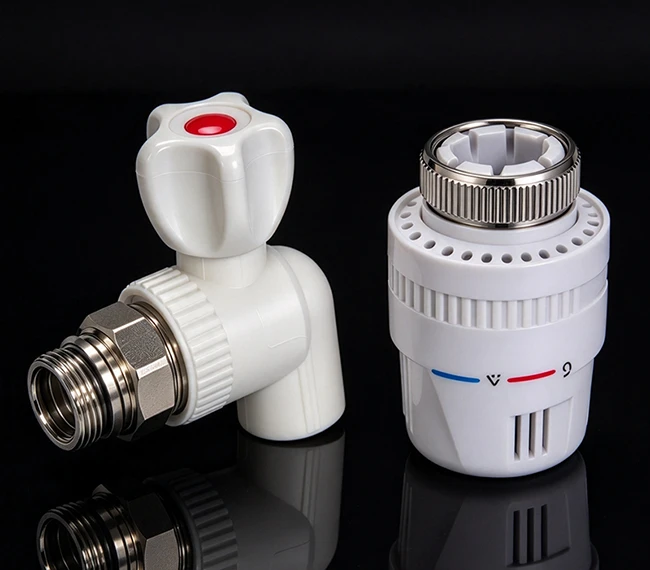
The inlet and outlet are set at 90°, with an integrally forged brass flow passage and a radiused, seamless corner transition. Designed specifically for side radiator connections, it mounts flush against the wall without an elbow, reducing the number of joints.
·Straight TRV
The inlet and outlet lie on the same straight line in an in-line flow passage, with water flowing axially through the body in line with the pipework for a smooth, uninterrupted layout. It suits bottom radiator connections or in-line pipe connections, and is most often used where pipework runs in a straight line.
2. Application Matching
·Where Angled Valves Are Used
1. Concealed wall pipes + side radiator connection: With pipes emerging horizontally from the wall to connect directly to the radiator's side inlet, the angled valve sits close to the wall for a neat, space-saving finish.
2. Retrofitting older heating systems: Replaces an existing side-mounted manual angle valve in place, with no pipework alterations, for a quick upgrade to thermostatic control.
3. Tight spaces: In compact areas such as bathrooms and small bedrooms, it leaves the front of the radiator unobstructed.
·Where Straight Valves Are Used
1. Concealed floor pipes + bottom radiator connection: With underfloor pipes rising vertically into the bottom of the radiator, the straight valve connects axially with minimal pressure loss.
2. Branch radiator temperature control: For controlling radiators on the same floor. In high-rise or multi-branch systems, specify a valve with a presetting function and carry out full hydraulic balancing.
3. Surface-mounted straight pipe runs: Where pipework runs straight along the wall, the straight valve connects in-line for a simpler installation and easier maintenance.
3. Three Common Mistakes to Avoid
1. Forcing a mismatch with elbows: Adding an elbow creates extra joints and leak points, and pushes the valve away from the wall so the sensor is shaded and its reading of room temperature is thrown off, which hurts control performance.
2. Ignoring flow direction: Angled valves are commonly configured for flow in at the bottom and out at the side, so always follow the recommended flow direction marked on the body. Fitting it in reverse or on the return side slightly reduces accuracy but does not affect valve life, and should not be treated as standard practice.
3. Checking only the size, not the connection: Overlooking the connection position and pipe run leads to misalignment and forced on-site re-piping. Before ordering, confirm the radiator connection conforms to EN 215 G 3/4". Non-standard threads require a custom or adapted solution.
4. Quick Selection Rules
Choose an angled valve for a side connection and a straight valve for a bottom connection. Choose an angled valve for pipes coming out of the wall and a straight valve for pipes coming out of the floor. Where the connection and pipe run already match, stick with the same nominal size for a like-for-like swap. This means fewer adapters, fewer leak points, lower cost, and greater system reliability.
Neither angled nor straight valves are inherently better. It is simply a matter of matching them to the application. Choosing the right body style unlocks the full energy-saving and temperature-control potential of a TRV, keeps installation and maintenance costs down, and ensures the heating system runs reliably.