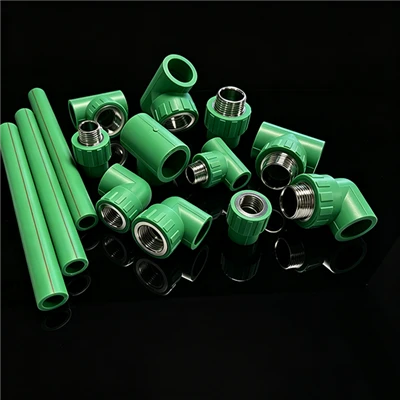
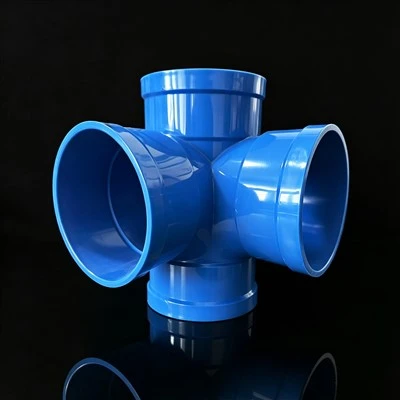
Brass-insert PPR fittings link plastic piping to metal fixtures, valves, and water meters-and are the most leak-prone point in any water supply system. Most failures trace back to inferior product selection. Unlike all-plastic fittings, judged on wall thickness and fusion, these must be evaluated on material, anti-pullout structure, and bonding process. Here is what to check.

I. Material and Wall Thickness of the Brass Insert
Quality features
• Made of thickened H59-grade or higher brass, dense and uniform in texture with clear, full thread forms
• Flat end face free of sand holes and burrs; noticeably heavier at the same nominal diameter, with wear-resistant threads that do not strip
• Resists corrosion during long-term water contact, suitable for repeated assembly and disassembly
Inferior features
• Often made from recycled scrap copper or thin copper-plated sheet, loose and brittle in texture with shallow, irregular threads
• Noticeably lighter at the same nominal diameter; prone to stripping, cracking, and copper rust seepage after use
II. Anti-Pullout Bite Structure
Quality features
• Multiple annular undercut grooves, knurling, or dovetail slots on the outside of the insert
• PPR material fully embeds into the grooves during injection, forming a solid mechanical interlock
• No separation between insert and plastic body under prolonged thermal cycling and repeated tightening
Inferior features
• Insert is typically a smooth cylinder, held only by the contraction force of the plastic
• Over time, plastic ages through thermal expansion and contraction, leaving gaps between metal and plastic
• Minor cases seep; severe cases see the entire insert detach, causing serious leakage

III. Injection Molding Fit and Process Precision
Quality features
• Uniform plastic body wall thickness with a flat, non-tapered port
• Internal socket stop ledge ensures precise pipe insertion depth and adequate fusion area
• Tight, gap-free bond between insert and plastic, preventing internal corrosion
Inferior features
• Uneven wall thickness, burred ports, no internal locating structure
• Prone to cold welding or over-melting during installation, increasing leakage risk
• Gaps at the bond surface trap water and corrode the insert from within over time
IV. Quality of the PPR Body Material
Quality features
• Produced from 100% virgin food-grade PPR, with uniform and translucent color
• Smooth surface free of bubbles and impurities, with a natural transition at the insert junction
• Resists brittleness and cracking under prolonged thermal cycling, with strong sealing stability
Inferior features
• Often blended with recycled material; dull, yellowish appearance with visible impurities
• Becomes brittle and cracks under thermal cycling, directly compromising the sealing structure
V. Core Selection Advice
The quality of brass-insert PPR fittings directly determines the sealing lifespan of the entire water supply system. Do not base your choice solely on price. Evaluate across four dimensions-brass texture, anti-pullout structure, bonding process, and material quality-prioritize products from the same brand as your pipes, request hygiene and pressure-rating test reports from the supplier, and pair them with proper hot-melt and threaded installation. Only then can you minimize leakage risk and ensure long-term, stable operation of the piping system.