✅Applicable Environments
·Residential Closed-Loop Heating Systems: Wall-mounted boilers with underfloor heating, steel radiators, and panel radiators in closed-loop circuits; the system has a closed water circulation, not directly connected to tap water, and the water temperature is consistently 40-80℃. Oxygen infiltration can corrode boiler heat exchangers, manifolds, water pumps, and steel radiators, making EVOH oxygen barrier PPR pipes suitable.
·Small Commercial Closed-Loop Hot Water Circulation Systems: HVAC circulation pipes for guesthouses and small office buildings, closed-loop hot water unit circuits; the system contains copper, steel, and cast iron metal heat exchange components.
·Solar Closed-Loop Heat Exchange Circuits: Pressurized closed-loop solar heating/hot water circulation pipes, operating at high temperatures, protecting metal collector modules by isolating oxygen.
Key Common Characteristics: Closed-loop system, relatively high medium temperature, numerous metal fittings at the rear of the pipes.
❌ Not Recommended / Not Suitable for Certain Environments
·Domestic tap water supply (open system)
·Tap water is constantly being replaced, so the impact of oxygen infiltration is negligible; there's no need for oxygen-barrier pipes, increasing costs.
·Simple water circuit with all plastic and no metal parts, eliminating the risk of metal oxidation.
·Open tank, non-closed circulation system; the water itself is exposed to air, making oxygen barrier pipes meaningless.
⚠️Key Environmental Restrictions
Medium: Clean water for heating; not suitable for highly corrosive fluids;
Temperature: Follow the pipe's PN rating; standard temperature range: -10℃ to 80℃; short-term peak temperature should meet PPR pipe standards;
Installation Notes: Do not grind or damage the intermediate EVOH oxygen barrier layer during cutting; oxygen barrier pipes cannot completely eliminate corrosion; for closed-loop heating systems, it is recommended to use a heating protection agent;
Distinction: EVOH five-layer co-extruded oxygen barrier ≠ aluminum-plastic composite pipe. The aluminum layer provides complete oxygen barrier, while EVOH provides high barrier properties; parameters should not be mixed.
Selection and Identification:
·Distinguishing True Five-Layer Co-Extruded EVOH Oxygen Barrier Pipes from Pseudo-Oxygen Barrier Pipes
True oxygen barrier PPR is a five-layer co-extruded, one-piece molding: PPR inner layer - adhesive layer - EVOH - adhesive layer - PPR outer layer, with the EVOH encased within the pipe.
Some low-priced products on the market only have an oxygen barrier coating sprayed on the surface. This coating will peel off after being heated, rubbed, or melted, quickly losing its oxygen barrier ability and failing to meet the DIN4726 oxygen permeability standard. When purchasing, check if the pipe markings indicate DIN4726 and EVOH five-layer co-extrusion.
·Pressure Rating Matching the System
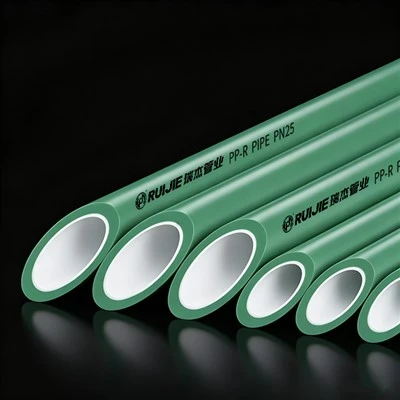
Buying oxygen barrier pipes doesn't mean everything is fine; the PN rating must also be matched. For underfloor heating and radiator systems, PN20/PN25 is preferred; avoid using PN16 low-pressure oxygen barrier pipes for long-term high-temperature heating, as their pressure resistance will decrease at high temperatures, easily leading to bulging and leakage.
·Color does not determine oxygen barrier performance. Many customers mistakenly believe that green or red pipes are oxygen barrier pipes. The pipe color is just a colorant; color ≠ oxygen barrier. Ordinary PPR can also be made green or red; you must check whether it has an EVOH oxygen barrier layer.