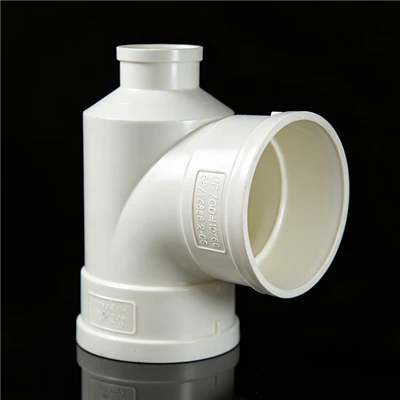
90° internal threaded elbows are available in two types: standard one-piece models and union models. When selecting materials, many people focus only on pipe diameter and thread size, overlooking structural differences. This often leads to difficulties during later equipment maintenance-pipes may need to be cut, wasting both time and money. Understanding the core differences and selecting based on actual needs allows you to balance upfront costs and long-term convenience.

I. Core Differences: Different Structures, Vastly Different Experiences
1. Structure
• Standard model: One-piece injection molded structure, fully fixed with no moving parts.
• Union model: Three-piece structure with a movable locking nut and sealing gasket; the joint can be disconnected and reconnected repeatedly.
2. Disassembly & Assembly Efficiency
• Standard model: Permanently fixed after thermofusion. Maintenance requires cutting the pipe and re-melting a new joint-multiple steps and time-consuming.
• Union model: Simply loosen the nut to separate the joint-no pipe cutting required. A single person can complete the task in ten minutes, improving efficiency several times over.
3. Long-Term Costs
• Standard model: Lower unit price, but each maintenance session incurs extra costs for pipes, fittings, and labor. Concealed installations may even require wall demolition and repair.
• Union model: Slightly higher unit price, but maintenance requires no extra consumables and saves on labor. The longer it is used, the lower the overall comprehensive cost.
II. Application Scenarios: Choose the Right One for Optimal Performance
1. Standard Internal Threaded Elbow: Ideal for Permanent Fixed Points
For pre-embedded wall outlets and pipe elbows that rarely need moving, the standard model is sufficient. Once installed, they basically stay put, controlling upfront costs and offering the best cost-effectiveness.
2. Union Elbow: Ideal for Equipment Connections
For equipment interfaces requiring regular cleaning and maintenance, such as solar water heaters and air-source heat pump water heaters, prioritize the PPR Union Elbow for Solar Water Heater. Maintenance does not require breaking pipes or walls, resulting in shorter water shutoff times and lower difficulty.
3. Centralized Pipeline Nodes: Prioritize Union Design
Valves, filters, and water meters in pipe shafts and equipment rooms require frequent maintenance. Using a union structure significantly reduces operation and maintenance workload and shortens water shutoff duration.
III. Selection Guide: Three Dimensions to Avoid Pitfalls
1. Select by Maintenance Frequency
More than one disassembly per year → Definitely choose the union model. Permanent pipelines that won't be touched for over five years → Choose the standard model. Don't blindly use all union models, nor cut costs by using all one-piece models. Matching based on actual needs is the most cost-effective approach.
2. Select by Interface Specifications
Match both the outer pipe diameter and thread size: De20 with 1/2", De25 with 3/4", De32 with 1" (for centralized high-flow systems) to avoid mismatches that cause leaks.
3. Select by Installation Location
Concealed in-wall installations that are difficult to maintain later → Prioritize union elbows to avoid wall demolition for repairs. Exposed and easily accessible points can be selected based on the situation.
There is no absolute "good" or "bad" between union elbows and standard internal threaded elbows; the key lies in whether they fit the application scenario. Choosing solely based on a low unit price often leads to higher repair costs later. Blindly using all union models is also a waste. Combining maintenance frequency, installation location, and specification requirements for selection is the most cost-effective choice.