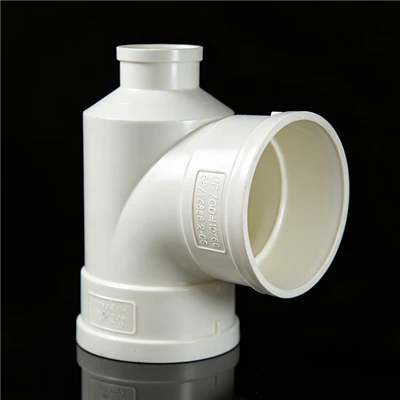
Ordinary PPR pipes have gaps between the plastic molecules in their walls, allowing oxygen to permeate into the water. The higher the water temperature, the more severe the oxygen permeation. PPR oxygen barrier pipes add an EVOH oxygen barrier layer (five-layer structure: PPR inner layer - adhesive layer - EVOH - adhesive layer - PPR outer layer) to prevent oxygen from seeping into the water system. They are mainly used in closed heating systems (wall-hung boilers, radiators, underfloor heating secondary side). Ordinary domestic cold tap water generally does not require oxygen barrier pipes.
Core Functions
· Protect system metal components and reduce corrosion. Heating systems contain wall-hung boiler heat exchangers, steel radiators, water pumps, copper valves, and manifolds. Oxygen in the water continuously oxidizes the metal, producing rust and sludge. Rust debris circulates with the water, clogging heat exchangers, wearing down pump impellers, causing noise, reduced heat exchange, and shortening the lifespan of boilers and radiators.
Ordinary PPR pipes used in closed heating systems are prone to oxygen permeation over time, making steel radiators more susceptible to internal rust and leaks. Oxygen-barrier pipes reduce oxygen permeability to within the DIN4726 standard, significantly slowing down oxidation and corrosion.
·Reduced sludge and scale, maintaining heating efficiency
Oxygen promotes the growth of aerobic microorganisms, producing biological sludge; it also accelerates scale formation. Sludge and scale adhering to the pipe walls reduce heat exchange efficiency. For every 1mm increase in scale thickness, the heating temperature can drop by 3-6℃, resulting in inadequate heating and increased energy consumption. Oxygen-barrier pipes inhibit algae and biological sludge formation, keeping the water system cleaner over the long term.
·Extended lifespan of the entire heating system, reducing maintenance
Complete heating systems are expensive. Using oxygen-barrier PPR pipes reduces rust and impurities, decreasing the frequency of pipe cleaning, pump replacement, and heat exchanger maintenance, thus extending the overall system's lifespan.
When is it necessary and when is it unnecessary?
·Scenery where PPR oxygen barrier pipes are recommended
Wall-mounted boilers, steel radiators, closed-loop heating systems; Small commercial closed-loop hot water systems, HVAC circulation pipes.
·Scenery where oxygen barrier pipes are not needed: Ordinary domestic cold water, tap water (open system, water constantly flowing and changing, oxygen infiltration is negligible); Simple water systems with no metal parts and all plastic components.
Important Notes
·When purchasing, look for five-layer co-extruded EVOH oxygen barrier pipes. The oxygen barrier layer is sandwiched in the middle of the pipe, not a surface coating. When cutting the pipes, do not grind or damage the middle oxygen barrier layer, otherwise the oxygen barrier effect will be lost.
·Oxygen barrier pipes can only reduce oxygen infiltration, not completely eliminate corrosion. It is still recommended to add a heating protection agent to the heating system as per regulations.
·Ordinary PPR oxygen barrier pipes ≠ aluminum-plastic composite pipes; the aluminum layer provides complete oxygen barrier, while EVOH provides high barrier; the manufacturing processes are different.
PPR oxygen barrier pipes are not for tap water; their core value is to protect metal components in closed heating systems, preventing rust and siltation, and maintaining heating efficiency.