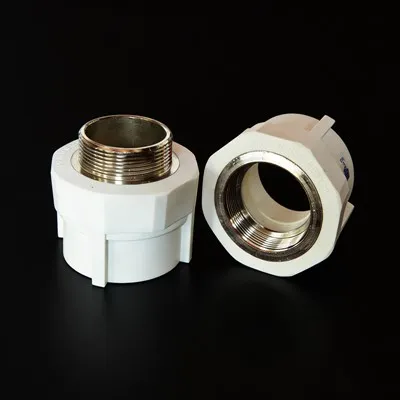
As a supplier of PVC Plastic Granules, I understand the critical role that viscosity plays in the processing of PVC plastics. Viscosity is a measure of a fluid's resistance to flow, and in the context of PVC plastic granules, it significantly impacts the ease of processing, the final quality of the products, and the overall efficiency of the manufacturing process. In this blog, I will delve into the various factors that affect the viscosity of PVC plastic granules during processing and share some effective strategies for controlling it.
Understanding the Importance of Viscosity in PVC Processing
The viscosity of PVC plastic granules is a key parameter that affects numerous aspects of the processing. When the viscosity is too high, it can lead to challenges such as difficult extrusion, poor mold filling, and increased energy consumption. On the other hand, if the viscosity is too low, it may result in products with poor mechanical properties, dimensional instability, and surface defects. Therefore, maintaining the optimal viscosity is crucial for achieving high-quality PVC products and ensuring smooth production processes.
Factors Affecting the Viscosity of PVC Plastic Granules
1. Polymer Molecular Weight
The molecular weight of the PVC polymer is one of the most significant factors affecting viscosity. Generally, PVC polymers with higher molecular weights have higher viscosities. This is because longer polymer chains tend to entangle with each other more readily, impeding the flow of the molten plastic. As a supplier of PVC Plastic Granules, we offer a range of PVC polymers with different molecular weights to meet the diverse needs of our customers. For applications that require high strength and toughness, polymers with higher molecular weights are often preferred, despite their higher viscosities. However, for processes that demand high flowability, such as injection molding of complex parts, lower molecular weight polymers are more suitable.
2. Temperature
Temperature has a profound effect on the viscosity of PVC plastic granules. As the temperature increases, the kinetic energy of the polymer molecules also increases, causing them to move more freely and reducing the viscosity of the molten plastic. Conversely, lowering the temperature leads to an increase in viscosity. During processing, it is essential to carefully control the temperature to achieve the desired viscosity. For example, in extrusion processes, the temperature of the barrels and the die needs to be precisely regulated to ensure proper flow and uniform melt properties. However, it's important to note that excessive heating can cause thermal degradation of the PVC, leading to discoloration, reduced mechanical properties, and the release of toxic gases.

3. Additives
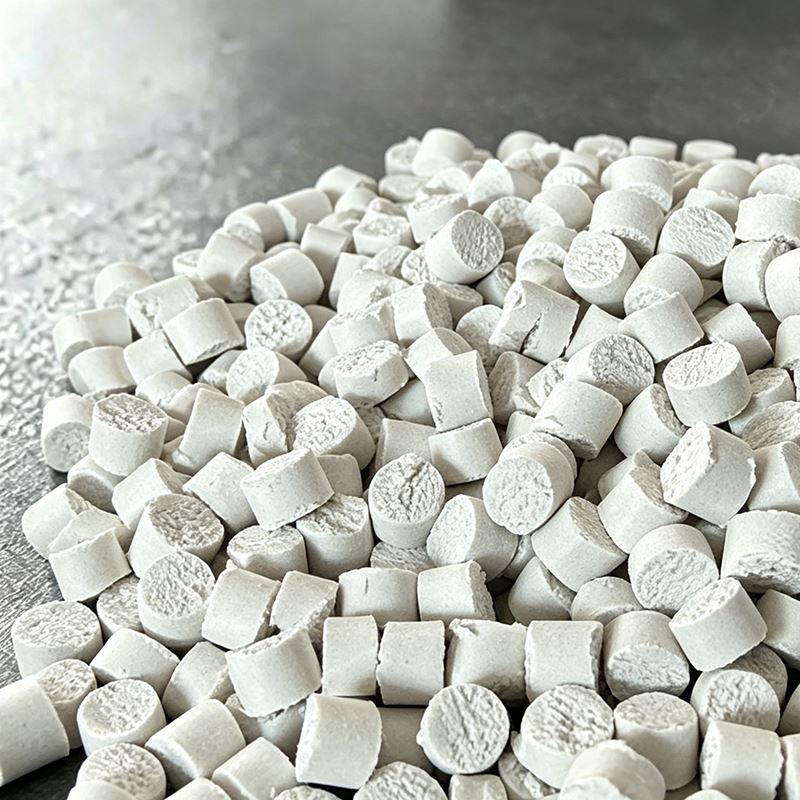
Additives play a crucial role in modifying the viscosity of PVC plastic granules. Plasticizers are perhaps the most commonly used additives for reducing viscosity. They work by inserting themselves between the polymer chains, increasing the distance between them and reducing the intermolecular forces. This results in a more flexible and fluid PVC melt. For instance, Rigid PVC Granules typically contain fewer plasticizers, resulting in higher viscosities and greater stiffness. On the other hand, flexible PVC products use a significant amount of plasticizers to achieve a more fluid and ductile material.
Lubricants are another type of additive that can affect viscosity. Internal lubricants reduce the friction between polymer chains, facilitating their movement and lowering the viscosity. External lubricants, on the other hand, reduce the adhesion between the molten plastic and the processing equipment, improving the flow through the machinery. Stabilizers are also important additives as they help prevent thermal degradation during processing, which can otherwise lead to an increase in viscosity due to cross - linking or chain scission reactions.
4. Shear Rate
Shear rate refers to the rate at which adjacent layers of the molten plastic move relative to each other. PVC is a shear - thinning material, which means that its viscosity decreases as the shear rate increases. During processing operations such as extrusion, injection molding, and calendering, high shear rates are applied to the PVC melt. In extrusion, for example, the rotation of the screw creates a high shear environment that helps to reduce the viscosity of the PVC plastic granules, making it easier to flow through the die. Understanding the shear - thinning behavior of PVC is essential for optimizing the processing conditions and ensuring consistent product quality.
Strategies for Controlling Viscosity
1. Polymer Selection
The first step in controlling viscosity is to select the appropriate PVC polymer. As mentioned earlier, polymers with different molecular weights have different viscosities. By carefully choosing the polymer based on the specific requirements of the application and the processing method, it is possible to achieve the desired viscosity. For example, for applications that require high - strength and relatively high viscosity, High Tensile Strength PVC Granules can be selected. Our technical team can assist customers in choosing the most suitable polymer grade to meet their needs.
2. Temperature Control
Precise temperature control is vital for maintaining the optimal viscosity during processing. In most PVC processing operations, multi - zone heating and cooling systems are used to control the temperature at different stages. For example, in injection molding, the temperature of the barrel is gradually increased along its length to ensure proper melting and plasticization of the PVC granules. The mold temperature also needs to be carefully controlled to ensure that the molten plastic cools and solidifies at the right rate. Advanced temperature sensors and controllers can be used to monitor and adjust the temperature in real - time, ensuring consistent viscosity and product quality.
3. Additive Optimization
The type and amount of additives used in PVC formulations can be adjusted to control viscosity. For applications where a lower viscosity is required, increasing the amount of plasticizers can be an effective solution. However, it's important to consider the potential impact of plasticizers on other properties of the PVC, such as mechanical strength and chemical resistance. Lubricants should also be carefully selected and dosed to achieve the right balance between reducing viscosity and maintaining good surface quality of the final product. Our R & D team is constantly working on developing new additive formulations to optimize the viscosity and other properties of our PVC plastic granules.
4. Process Parameter Adjustment
Adjusting the processing parameters such as screw speed, injection speed, and pressure can also have a significant impact on viscosity. Increasing the screw speed in extrusion or the injection speed in injection molding can increase the shear rate, which in turn reduces the viscosity of the PVC melt. However, these parameters need to be adjusted within a reasonable range to avoid issues such as excessive shear heating, material degradation, and poor product quality. Process optimization through trial - and - error and the use of advanced process monitoring systems can help to find the optimal set of parameters for each specific application.
Conclusion
Controlling the viscosity of PVC plastic granules during processing is a complex but essential task for ensuring the quality and efficiency of PVC product manufacturing. By understanding the factors that affect viscosity, such as polymer molecular weight, temperature, additives, and shear rate, and implementing effective strategies for controlling it, such as polymer selection, temperature control, additive optimization, and process parameter adjustment, manufacturers can achieve consistent product quality and meet the diverse requirements of different applications.
As a leading supplier of PVC Plastic Granules, we are committed to providing our customers with high - quality products and technical support. Whether you are looking for Rigid PVC Granules for construction applications or High Tensile Strength PVC Granules for industrial uses, our team of experts can help you find the best solutions for your specific needs. If you are interested in purchasing our PVC plastic granules or have any questions about viscosity control in PVC processing, please feel free to contact us for a detailed discussion and personalized advice.
References
- Boiteux, G. (Ed.). (2009). PVC: Properties, Processing, Applications. Wiley - VCH.
- Vergnaud, G. (2007). Polyvinyl chloride. In Encyclopedia of Polymer Science and Technology (3rd ed.). Wiley.
- Sobkowicz, L., & Pospiech, D. (2010). Poly(vinyl chloride) (PVC)–past, present, and future. European Polymer Journal, 46(9), 1737 - 1750.