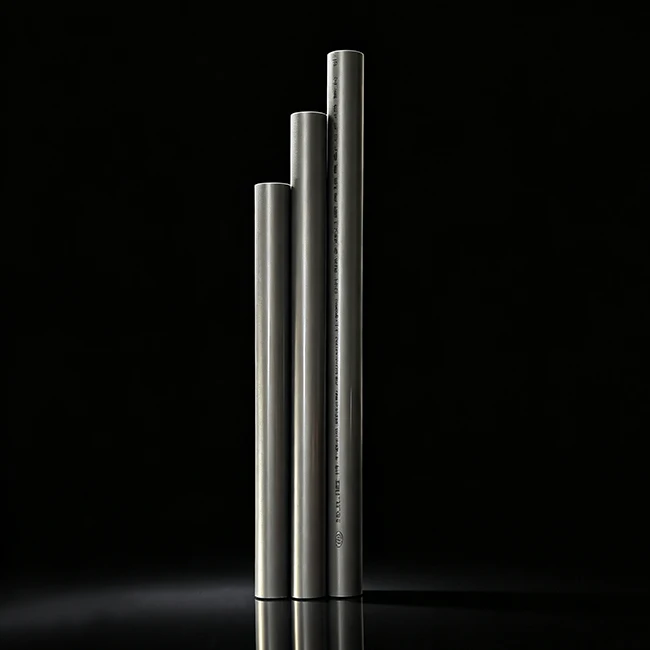
Underfloor heating pipes are part of concealed works. The cost of repairing leaks after installation far exceeds the pipe material cost itself. The core of selection comes down to one principle: match the working conditions. Choose precisely across four dimensions: pipe diameter, pressure rating, material, and application scenario. Avoid the two extremes of "thicker is better" and "cheaper is better".
1. Check Working Conditions Before Selecting Parameters
The first step is to confirm four data points: long-term operating water temperature, system working pressure, building type, and installation scenario.
Standard underfloor heating supply water is 35 to 60°C. PERT has a maximum temperature tolerance of 70°C, which fully covers this range. The real factor determining wall thickness grade is system pressure. Building height and whether it connects to central heating directly affect pressure fluctuations. Thicker wall does not mean better. Excessively thick walls reduce the inner diameter, lower flow rate, and negatively affect heat dissipation. Determine the pressure first, then select the wall thickness.
2. Pipe Diameter and Wall Thickness
Common sizes are 20mm and 25mm, corresponding to two pressure ratings: S5 and S4. The principle is: choose 20mm for branch lines and 25mm for main lines. Choose S5 for standard conditions and S4 for high pressure.
• 20×2.0mm S5: First choice for standard residential branch lines, fits over 90% of home layouts. Offers the optimal balance of flow resistance and heat output.
• 20×2.3mm S4: High-rise residential buildings and systems with large water pressure fluctuations. Provides a higher safety margin.
• 25×2.3mm S5: Main lines for large residences, hotels, office buildings, and other commercial projects. Meets high flow demand.
• 25×2.8mm S4: High pressure scenarios such as municipal central heating and outdoor snow melting. Thick wall design withstands high pressure and water hammer.
Selection advice: Prioritize 20mm for branch lines and 25mm for main lines. If working pressure exceeds 0.8MPa or water hammer risk exists, upgrade to S4 series. For villas and passive houses, select based on designed heat load.
3. Connection and Material
The core advantage of PERT is its heat fusion capability. Heat fusion socket welding fuses the pipe and fitting at the molecular level. Joint strength equals that of the pipe body itself, eliminating leakage risks for concealed installation. Later damage can be locally repaired by heat fusion without replacing the entire pipe. This is the key advantage over mechanically connected PEX pipes.
Material must be virgin heat-resistant polyethylene. The inner wall is smooth and resists scaling, ensuring no long-term flow rate degradation. Recycled material pipes become brittle at low temperatures and prone to creep at high temperatures. Their service life is less than one-third of standard products. Avoid them completely. Pipes and fittings must be from the same brand to prevent cold welding caused by differences in melt flow index.
4. Additional Configurations by Scenario
• Standard homes and all-plastic systems: Standard PERT pipes meet regular heating needs.
• Systems with metal components: When copper manifolds, boilers, or other metal parts are present, select EVOH oxygen barrier pipes to block oxygen ingress and prevent metal corrosion.
• Central heating and high-rise projects: Directly select S4 thick-walled pipes to withstand pressure fluctuations and water hammer.
• Commercial projects: Main line 25mm, branch line 20mm. Match spacing according to designed heat load.
5. Four Pitfalls to Avoid
1. Don't judge by unit price alone. Inferior pipes may be 10% to 20% cheaper, but the repair cost from leaks can be tens of times the pipe cost.
2. Don't blindly choose thicker walls. Select the series based on actual pressure. S5 satisfies most residential needs. Using all S4 may reduce flow rate due to smaller inner diameter.
3. Don't mix brands. Use pipes and fittings from the same brand and same batch to prevent slow leakage from cold welding.
4. Don't skip pressure testing. Complete a hydrostatic test at 1.5 times the working pressure before backfilling. Only backfill after successful pressure holding. This is the only chance to remedy concealed pipes.
There is no one-size-fits-all standard for PERT underfloor heating pipe selection. Match pipe diameter and wall thickness based on three factors: water temperature, pressure, and scenario. Combined with standardized construction and inspection, the system can operate stably for the long term.